Bathroom and Kitchen Cleaning: Agreeing a Safe Scope
Count Profit LLC Editorial · 2026-10-30 · 4 min read
Discuss surfaces, products, appliance interiors, and exclusions before booking targeted kitchen or bathroom cleaning.
Identify surfaces and materials
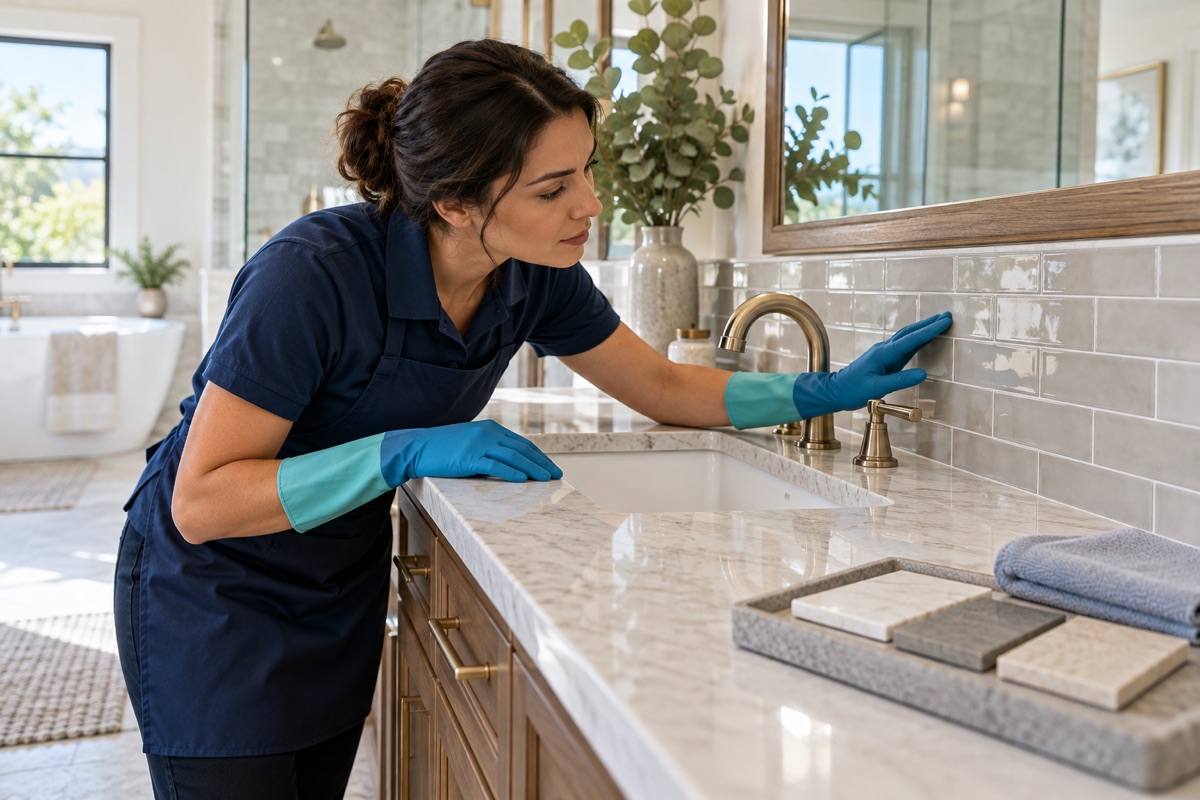
Tell the provider about natural stone, specialty grout, wood, coated fixtures, and other finishes with particular care requirements. Make the manufacturer’s care instructions available when possible. A product that suits one surface can damage another. Ask how the cleaner chooses products and equipment and how a problem would be reported. Ordinary cleaning is not the same as repairing damaged finishes or permanently removing every stain. Agree on realistic expectations based on the actual condition.
Separate cleaning from disinfection
Cleaning removes dirt and residues; disinfection is a separate task using an appropriate product and its label directions when needed. Ask what the booking includes. Follow product labels for dilution, contact time, ventilation, storage, and protective equipment. Never mix cleaning chemicals, and do not combine bleach with other cleaners. Keep products away from children and pets. If the work involves illness, unusual contamination, or a specialist hazard, discuss it before booking and seek appropriate guidance.
Explore Bathroom Cleaning options and compare relevant provider listings while defining the work you need.
Clarify detailed tasks
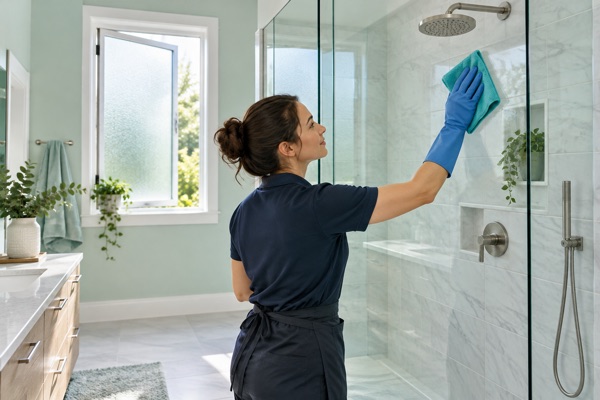
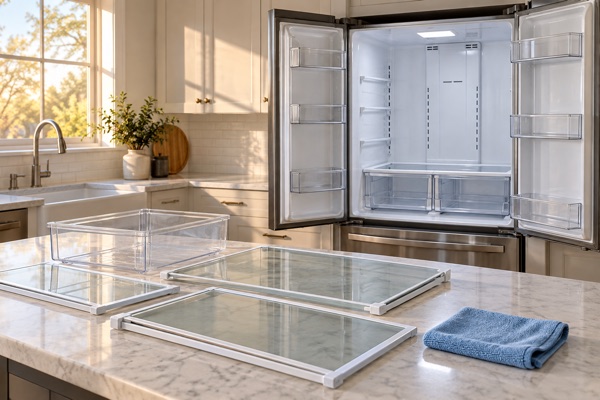
For bathrooms, discuss sinks, toilets, tubs, showers, mirrors, floors, and reachable fixtures. For kitchens, discuss counters, sinks, stovetops, appliance exteriors, floors, and cabinet fronts. Confirm whether grout detail, oven interiors, refrigerator interiors, or inside cabinets are add-ons. Ask what preparation is needed and whether products are supplied. A cleaner may not be equipped to move appliances, dismantle fittings, treat mold growth, or clean unsafe high areas. Record those exclusions before the visit.

Allow enough time
Kitchen and bathroom work can be time-intensive when there is heavy buildup. Explain the condition and identify the most important tasks before accepting an estimate. Ask how the provider handles work that exceeds the booked time and how additional charges are approved. Review the finished work against the agreed checklist, not an assumed universal standard. If a surface still needs repair or specialist treatment, arrange that separately rather than repeating an unsuitable product or abrasive method.
Use a separate checklist for each room
Bathrooms and kitchens share some cleaning needs but contain different materials and uses. List the agreed fixtures, surfaces and accessible floors for each room. Name appliance interiors, cupboard interiors or detailed shower work separately, and state who clears personal products, dishes or food. Ask the provider how tools are separated between areas. A single instruction to clean both rooms makes it difficult to compare estimates or resolve a missed task later. The list should be detailed enough to identify the work without expanding into repairs, dismantling or specialist restoration the cleaner has not offered.
Protect food handling and personal items
FoodSafety.gov advises cleaning food-preparation surfaces and utensils after use and preventing cross-contamination. Ordinary household food handling remains important between professional visits. Arrange who removes food from an appliance or clears personal bathroom items before interior or detailed work starts. Do not expect the cleaner to decide which food to discard or where medicines belong. Keep manufacturer care instructions available for appliances, coatings and delicate surfaces. If a component is damaged or a condition falls outside ordinary cleaning, request an appropriate assessment rather than asking for an improvised chemical treatment.
Check the result against the defined scope
Review the agreed surfaces and ask whether any limitations were found. A persistent mark can reflect wear or damage rather than an omitted task; a new task should be quoted as new work. Follow product instructions about use after application, and give specific feedback under the business's correction policy. For ongoing visits, decide which details belong in routine upkeep and which require separate occasional bookings. Keep your own light maintenance realistic. The objective is a repeatable room-specific agreement, not an unsupported promise that every bathroom and kitchen can be made germ-free or restored to a new condition.
Common questions
Do I need disinfection every time?
CDC says routine cleaning is sufficient in many household situations; disinfection may be relevant when someone is sick or at higher risk. Follow current official advice and product directions rather than assuming it belongs in every booking.
Are harsh products necessary for a detailed clean?
Not automatically. The method must suit the material and the product label. Do not request stronger mixtures or extra abrasion as a substitute for discussing realistic results and manufacturer care restrictions.
Primary sources and further reading
Source pages checked 2026-10-30. Follow current product instructions and advice relevant to your circumstances.
Explore related services
Provider listings to explore
These listings are a starting point, not endorsements. Confirm your location, scope and service terms directly.
- Metla House Cleaning San Diego — San Diego, California
- A Step Above Cleaning Concepts LLC — Traverse City, Michigan
- Busy Bee Cleaning — Milford, Connecticut
Find a Provider for Your Project
Ready to discuss bathroom cleaning? Compare listings, ask about the work you need and request a written scope.
Browse Bathroom Cleaning providers List your cleaning business